LUNA is Universal Audio’s recording system. It is free on Mac and Windows, so if you track through an Apollo or a Volt, you may already have it. LUNA sessions hold audio and MIDI, and the visuals come from a plugin. You load a visualizer on a track, press play, and record the result. It all happens inside your session, with no export and no video editor.
The plugin route: a visualizer on the Main Output track
A visualizer plugin loads into an insert slot like any effect, with every look already built. You pick a scene and a palette, and it reacts to the track from the first beat.
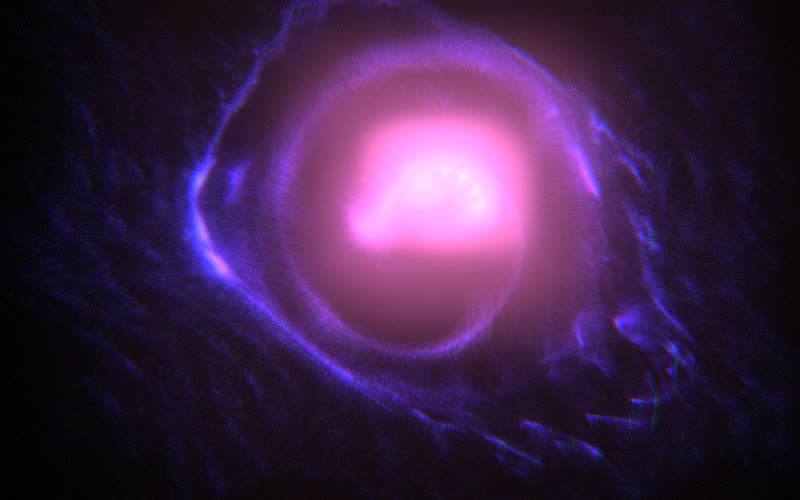
This is the route Photism takes. It is a VST3 and Audio Unit effect that passes your audio through untouched, and the plugin window is the visualizer. Twenty-four scenes, from marbled ink to architectural geometry to a live reaction-diffusion figure, each react to kicks, bass weight, and energy in real time.
Install and scan
- Install the plugin. On a Mac, run the Photism installer. It
puts the Audio Unit and the VST3 where LUNA looks. On Windows,
extract the zip and copy the whole
Photism.vst3folder intoC:\Program Files\Common Files\VST3, with the Contents folder still inside it. - Scan it in LUNA. Click the three dots at the top left of the LUNA window and choose Manage Plug-Ins, or open Settings and click the Plug-Ins tab. Click New Plug-Ins in the Scan area. Photism’s status changes to scanned.
- Switch on VST3 if you share sessions with Windows. On a Mac, LUNA starts with Audio Units on and VST3 off. Toggle Enable for VST3 and click Rescan All. LUNA asks you to close the open session first. Use the VST3 version of Photism in any session that travels to a Windows machine.
Load it on the Main Output
- Switch to Mixer view with the selector at the left of the control bar, or press Command+= (Ctrl+= on Windows). Find the Main Output track.
- Click an empty slot in its Inserts row. The plug-ins browser opens on the left. Start typing Photism and click it in the list.
- The plugin window opens, and it is the visualizer. Press play in LUNA and the picture starts moving with the song.
On the Main Output, Photism hears the whole mix. Put it on a single track or bus instead and it follows only that part, a drum bus for example. If the space bar does nothing while the Photism window has focus, click Play in LUNA’s transport.
Pick a look
Every control has a button in the row along the corner of the window, so you can drive the whole thing with the mouse:
- tab · scenes opens the scene grid. Click any scene to jump to it.
- p · opens the palette card. Every color set is on one card.
- x · shuffle picks a fresh scene and palette in one click.
- g · tune opens the tuning panel, with the macros, the lens, and your saved presets.
The keyboard shortcuts take shift in the plugin: shift+g for the panel, shift+r to record, shift+o for the output. LUNA has shift commands of its own, so if a key does something in LUNA instead, use the button. Drop an album cover onto the window and Photism builds a five-color palette from it, so the visuals match the release.
Record the video
- Choose the frame with the a · button: 16:9 for YouTube, 9:16 for Reels and TikTok, 1:1 for a square post.
- Put the playhead at the start of the song. Pressing Return in LUNA jumps there.
- Click r · rec in the window, or press shift+r, then press play in LUNA.
- When the song ends, click the record button again. The button steps through finishing, adding sound, and saving, then names the folder.
The MP4 saves to your Downloads folder with the song already in it, taken from the track Photism sits on. You skip the mixdown and the step of lining the song up in an editor. Clips record at each platform’s upload size, and the recording settings in the tuning panel go up to 4K.
Keep the plugin window open until the button says saved. Covering it with other windows is fine, and closing it ends the take. LUNA’s shift+W hides every floating window and Command+W (Ctrl+W on Windows) closes the top one, so leave both alone while a take runs.
Change scenes on the drop
Photism’s scene, palette, mode, preset slot, and main controls are ordinary plugin parameters, so LUNA can automate them:
- In Timeline view, find the Main Output track. New sessions pin it to the bottom of the Timeline.
- Click View in its track controls and choose Photism’s Scene from the browser. The parameter line appears on the track.
- Hold Control and click to add points: one just before the drop on the current scene, one on the drop on the new scene. With the track’s automation mode on Read, every playback switches the scene on that beat.
The same works for Palette at the bridge, Spin or Mirror as a slow build, or Preset Slot to swap the entire look on a section.
Getting it on a second screen
Click o · output, or press shift+o, to open a separate output window. Drag it to your second display or projector and make it fullscreen. It shows the visuals alone, with no buttons. To stream it, turn on Syphon (Mac) or Spout (Windows, beta) in that window’s top bar and pick the Photism source in OBS, Resolume, or TouchDesigner. On a Mac, the first Syphon feed asks for Screen Recording access. Allow LUNA, since the plugin runs inside it. The Syphon and Spout guide covers the receiving side.
Which setup to pick
| You want | Best setup |
|---|---|
| Visuals for the whole song | Photism on the Main Output |
| Visuals that follow one part | Photism on that track or bus |
| A session that opens on Mac and Windows | VST3 switched on in LUNA, and the VST3 version of Photism |
| Visuals on a projector or in OBS | The output window, with Syphon or Spout |
Photism runs inside your session, so trying it costs nothing but an insert slot. You can feel Photism’s engine before installing anything at photism.app/online, which runs three scenes free in your browser from a dropped track or your mic.