A photism is an involuntary visual sensation triggered by a stimulus that has nothing to do with vision. In practice the trigger is usually sound: a chord plays and the listener sees a color, a shape, a moving form. The experience arrives on its own, without effort or imagination, every time the trigger occurs.
The word belongs to the scientific literature on synesthesia. When a person with sound-to-color synesthesia hears a trumpet and sees scarlet, the scarlet itself, the visual event, is the photism.
Where the term comes from
Photisms entered the scientific record in the 19th century. In 1881 the psychiatrist Eugen Bleuler and his colleague Karl Lehmann published a study of people who experienced compulsory light sensations in response to sound, one of the first systematic accounts of synesthesia. French researchers of the same era, including Théodore Flournoy, used photisme for the induced visual experience, and the term stuck. It has been standard vocabulary in synesthesia research ever since.
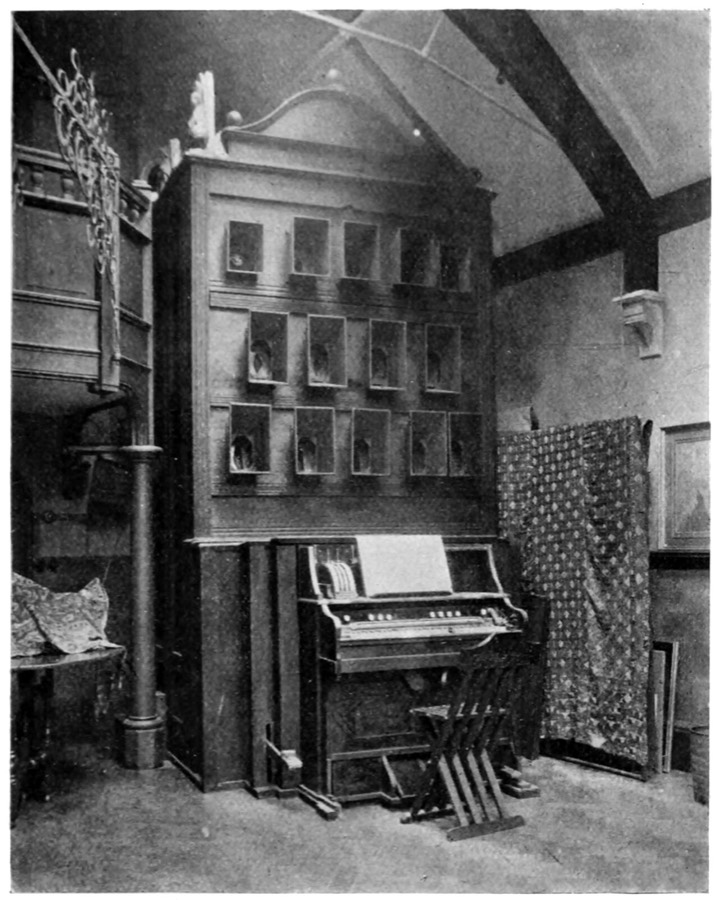
The same decades produced the first machines for people who wanted what synesthetes described. Alexander Wallace Rimington patented his Colour-Organ in 1893, an instrument that performed washes of colored light alongside music.
What photisms are like
Reports across a century of research agree on a few properties:
- Involuntary. The photism appears whether or not the person wants it to. It cannot be suppressed or summoned at will.
- Consistent. The same trigger produces the same visual, often stable across decades. Researchers use this test-retest consistency to distinguish genuine synesthesia from learned association.
- Specific. Photisms track fine detail in the trigger. A change of instrument, key, or loudness changes the color, brightness, or motion of the visual.
- Located. Some people see photisms projected into the space in front of them; others describe an inner screen, seen in the mind’s eye but vivid and precise.
Sound-triggered photisms are the signature of chromesthesia, the sound-to-color form of synesthesia that many musicians describe.
Why our software is named after it
Photism is an audio-reactive visualizer for Ableton Live, and it borrows the word deliberately. The device listens to your music and renders what a synesthete might see: color and structure driven by the sound itself, involuntary and instant. For the few percent of people born with photisms, that pairing is just how music sounds. For everyone else, there is software.